


Cargo Boom
4.516.00 Reviews
App Specs
- Version
- 0.7.05
- Updated On
- License
- Free
- Downloads
- 100,000+
- Developer
- Skyloft Yazılım Bilişim ve Anonim Şirketi
- Categories
- Arcade
- Platform
- Android
Screenshots
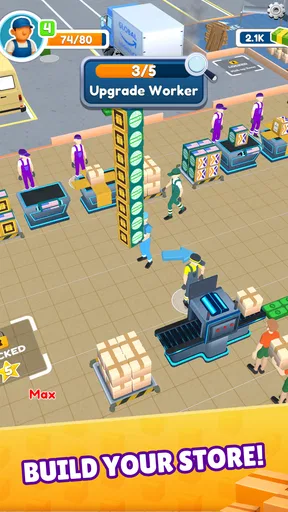
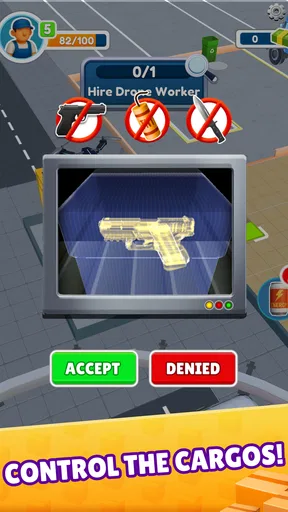
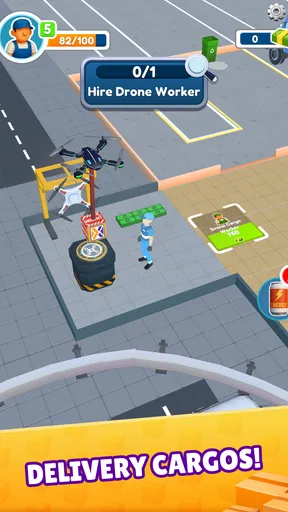
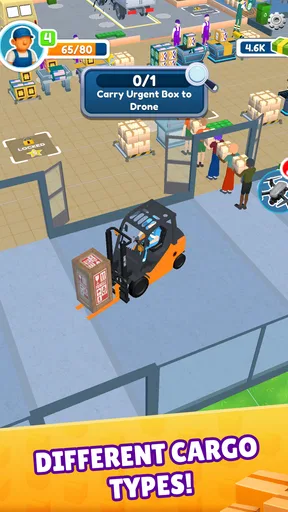
 Analysis by AppCompare
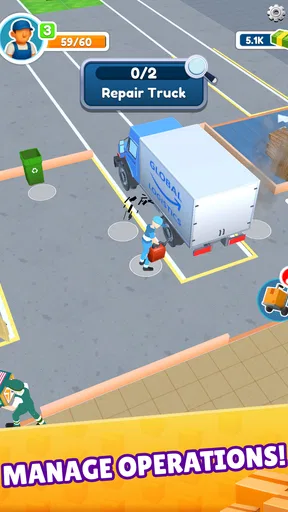
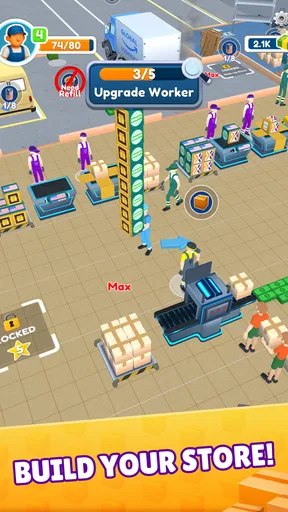
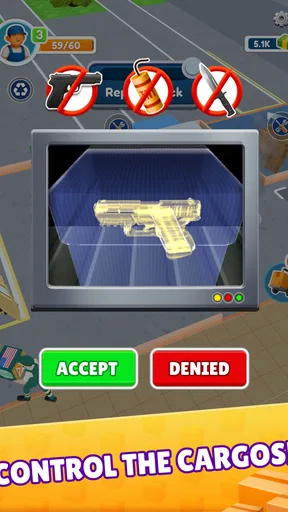
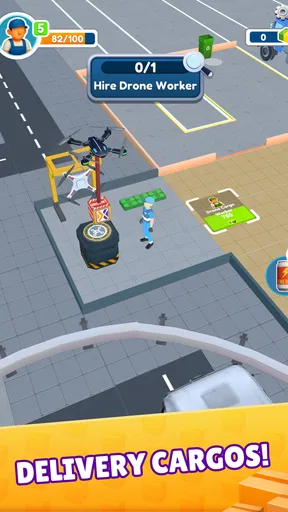
I spent my first sessions with Cargo Boom expecting a simple arcade distraction, and that is exactly where it initially works best. The central idea is easy to understand: scan incoming boxes, bring workers into the operation, improve delivery hubs, and gradually turn a small logistics setup into something much larger. It has the kind of immediate loop that makes sense within minutes, yet it also asks an important question after the novelty wears off: is there enough satisfying decision-making to make this a regular game rather than a brief download?
My short answer is that it can earn a place on an Android phone for players who enjoy light management wrapped in quick arcade actions. It is free to start, rated for Teen players, and has already reached over 100 thousand installs with a 4.5 average from around 1.3 thousand ratings. Those figures suggest that the basic formula is connecting with people, but they do not remove the need to look at how the game feels over repeated sessions. In my experience, the opening is more compelling than the long-term routine, so your expectations matter.
How the delivery loop feels during the first week
The strongest part of the opening is the clarity of the work. Boxes are not presented as an abstract number on a screen; the scanning action gives the business a visible starting point. From there, hiring workers and improving hubs creates a natural sequence. I always knew what the next useful action was, which made short sessions comfortable rather than demanding.
That simplicity is a real advantage for an arcade game. I could open it while waiting for a bus, complete a few actions, and leave without needing to remember a complicated plan. The game also avoids making its premise feel like a spreadsheet exercise. The delivery theme gives the upgrades a practical context: a better hub should help the operation move more smoothly, while additional workers suggest that the business is growing beyond what one small setup can handle.
During the first week, the appeal comes from visible progress. Early improvements feel meaningful because the operation changes from a modest beginning into something that appears more organized. I found myself checking whether another upgrade would make the next session faster or simply make the whole business look more developed. That distinction matters. A good idle-style management game needs both progress and a reason to care about the progress, and Cargo Boom at least establishes that relationship quickly.
The game is also approachable for people who do not usually play management titles. You do not need prior knowledge of transport networks or business simulations. The arcade presentation keeps the focus on simple actions, while the management layer adds just enough planning to prevent the experience from being a single repetitive tap. For a friend who wanted something lighter than a full strategy game, I would describe this as an accessible starting point.
One useful habit is to treat the first few sessions as an observation period instead of spending every available improvement immediately. I paid attention to which action actually changed the pace of the operation and which one merely felt rewarding because it was available. That small distinction helps prevent careless progression. In games built around upgrades, the most visible button is not always the most valuable choice, and this title benefits from taking a moment to compare the practical effect of each option.
Worth Reading Before You Choose

Flipboard Shows What News Apps Must Do Beyond the Feed

Switching to Android Auto Means Rethinking Your Driving Routine

Google Calendar Makes a Crowded Week Easier to Manage

Ludo King Makes the Most of the Minutes Between Plans

Baby Panda World Brings Quick Play to Modern Phones, but Its Game Library Feels Busy

ESPN’s Live Game View Makes Following Close Games Easier
Another early tip is to avoid turning every spare minute into a forced check-in. The first-week loop is enjoyable partly because it remains fresh. If you open the game only when you genuinely want a quick delivery-management session, the scanning and upgrading rhythm stays pleasant. If you begin checking constantly just to avoid missing a small improvement, the same loop can start to feel like an obligation before the game has had a fair chance to develop.
For younger players, the Teen content rating is worth considering before installing. It does not automatically make the game unsuitable, but it is a reminder that parents should make their own decision rather than assuming that a colorful arcade presentation is designed for children. The game is free to download, while individual in-app purchases range from $2.99 to $5.99, so I would also discuss spending expectations before handing it to someone who may be tempted by optional purchases.
What makes the opening more than a basic clicker
The interesting part is the tension between manual activity and gradual automation. Scanning boxes gives the player something direct to do, while workers and hubs represent the longer view. I enjoyed switching between those two perspectives. One moment I was focused on the immediate flow of cargo; the next I was thinking about how an improved operation might reduce the need for constant attention.
That balance is also where the first meaningful trade-off appears. A player who prefers active arcade play may find the management layer too slow, while someone looking for a deep business simulator may find the decisions too light. Cargo Boom sits between those audiences. Its strength is not complexity; it is the way it makes a simple logistics theme understandable without requiring a long tutorial or a large time commitment.
The current version is 0.7.05, and that detail shaped my expectations. I approached the game as a developing experience rather than a finished, content-heavy management world. That means the clean, focused loop is welcome, but it also means I would not install it expecting the breadth of a mature tycoon game. The developer, Skyloft Yazılım Bilişim ve Anonim Şirketi, has a foundation that works, yet the lasting value will depend on whether the core routine continues to feel worthwhile as players become familiar with it.
What remains useful after the first month
After the first month, the question changes from “Can I make progress?” to “Do I still enjoy returning?” In my view, Cargo Boom has recurring value for players who like compact sessions and gradual improvement, but it is less convincing for anyone who needs constant strategic surprise. Once the basic relationship between scanning, workers, and hubs becomes familiar, the pleasure comes mainly from optimizing a routine rather than discovering an entirely new way to play.
That can be enough. Many people do not want a game that demands full concentration every time they open it. A delivery-management arcade game can work well as a low-pressure companion to a daily routine. I could imagine playing it during a coffee break, making a few sensible adjustments, and closing it before it became a major interruption. The important point is to use it as a small habit, not as a game that must fill an entire evening.
A realistic everyday scenario would be a player checking in after work, scanning the available boxes, assigning attention to the most useful improvement, and leaving once the next step is clear. That pattern gives the game a purpose without allowing it to dominate the evening. It is especially suitable for people who enjoy watching a system grow but do not want to memorize long build orders or manage dozens of simultaneous menus.
My best long-term approach was to give each session a specific intention. Sometimes I focused on making the current hub more efficient. At other times I concentrated on the worker side of the operation. This prevented the game from becoming an automatic sequence where I simply pressed whatever appeared first. Even in a relatively simple arcade management title, setting a small goal can restore a sense of choice.
There is also a useful trade-off between speed and attention. If you want the fastest possible progress, you may feel pushed toward frequent interaction or optional spending. If you are willing to progress more patiently, the free structure is easier to enjoy on its own terms. I prefer the second approach because it keeps the game from turning a relaxing loop into a shopping decision. The in-app purchase range is noticeable enough that budget-conscious players should decide in advance whether they will spend anything.
Compared with a traditional arcade game, Cargo Boom offers more persistence. A conventional arcade title may give you a score chase, a short challenge, or a repeatable level, while this game gives your actions a continuing business context. Compared with a full tycoon or transport simulator, however, it is much lighter. You will likely spend less time planning complex networks, but you may also have fewer reasons to rethink your entire strategy.
That comparison helps identify the right audience. If you want quick feedback, simple progression, and a delivery theme, this is a more comfortable choice than a demanding simulation. If you want detailed routes, deep economics, or highly varied scenarios, I would choose a more specialized management game instead. Cargo Boom earns its place through convenience and accessibility, not through simulation depth.
How to keep the routine from becoming automatic
The most useful long-term tip I found is to separate progress from activity. Scanning more boxes can feel productive, but not every active moment improves the overall operation equally. I learned to pause before spending resources and ask whether the next worker or hub improvement would change how I play, or merely increase a number. That question makes the lighter systems feel more deliberate.
I also recommend setting a stopping point. Once the next meaningful action requires a long wait, a repeated sequence, or a purchase you did not plan to make, closing the game is often better than continuing out of habit. This is not a criticism of the title alone; it is practical advice for any progression game. Cargo Boom is at its best when the player controls the length of the session instead of chasing every small prompt.
Another overlooked use case is short-term travel. The compact loop suits moments when you want interaction but cannot commit to a full match or story chapter. I would still treat it as a game for active checking rather than something to assume will replace a deeper offline pastime. Its value comes from fitting around your schedule, not from demanding that your schedule fit around it.
Maintenance, fatigue, and the cost of staying interested
The maintenance burden is moderate rather than severe. The game is easy to understand again after a break, which is important for a title intended to become a habit. I did not feel that I needed a notebook or a long refresher to remember the basic purpose of workers and hubs. That accessibility supports casual return visits.
The burden appears when the routine starts to feel like housekeeping. Scanning boxes, checking workers, and improving hubs are satisfying while each action has a visible consequence. Once the player has seen the same pattern many times, those actions can begin to resemble chores. The game needs enough variation in goals or enough meaningful choices to prevent the delivery empire from becoming a list of errands.
This is where the current version matters again. At 0.7.05, I would give the game some room to grow, but I would not judge it as though it already offered the content range of a long-established arcade management series. The foundation is clear, and the first sessions are polished enough to communicate the idea, but long-term retention will depend on continued reasons to return rather than simply repeating the opening loop.
Fatigue can also come from the gap between what the theme suggests and what the player actually controls. “Global delivery empire” sounds expansive, yet the enjoyment depends on how much meaningful control the game gives over that expansion. If you mainly want the feeling of growth, the progression can remain satisfying. If you want to make detailed logistical decisions, the simplified structure may eventually feel restrictive.
I would also watch for purchase fatigue. Free entry is helpful, but optional items priced from $2.99 to $5.99 can change how some players perceive the rhythm of progress. I found the most comfortable experience came from deciding that purchases were optional extras rather than part of the basic plan. Players who dislike any pressure around spending may prefer a premium arcade title with a single upfront cost, even if it offers less ongoing progression.
Device compatibility is broad enough for many older Android phones because the minimum requirement is Android 7.0. That makes it easier to consider for a secondary device or an older handset, although compatibility alone does not guarantee that every phone will feel equally smooth. I would keep expectations practical: this is a lightweight game concept, but the actual experience still depends on the device and the way you use it during repeated sessions.
The developer’s identity is clear: Skyloft Yazılım Bilişim ve Anonim Şirketi is behind the game. For me, that matters less as a branding point than as a reason to watch how the title develops. A game built around a simple but repeatable loop benefits greatly from thoughtful updates, because small additions to goals, progression, or decision-making can make the difference between a temporary distraction and a dependable daily game.
Who should install it, and who should skip it
I would recommend Cargo Boom to players who enjoy watching a small operation grow, prefer short sessions, and like arcade mechanics with a light management layer. It is also a good match for someone who wants a game that can be understood quickly without sacrificing all sense of progression. The delivery theme gives the routine a clear identity, which is more appealing to me than an upgrade system with no recognizable purpose.
I would skip it if your main requirement is deep strategy. Players who want complex routes, detailed supply chains, competitive planning, or a large variety of distinct scenarios may outgrow this experience. I would also be cautious if you are easily pulled into repeated check-ins or unplanned purchases. The game is most enjoyable when you decide your own pace and accept that progress can be gradual.
It is not the best alternative to every arcade game, either. Someone seeking reflex challenges, score attacks, or fast level-based action may find the delivery-management loop too passive. In that case, a traditional arcade title would provide more immediate skill testing. Cargo Boom is better for the player who enjoys small operational decisions and the satisfaction of returning to an evolving setup.
My long-term verdict on Cargo Boom
After the initial novelty fades, Cargo Boom keeps its value through convenience rather than endless surprise. The scanning, worker, and hub structure is easy to revisit, and the free entry makes it simple to test without a commitment. I like that it can fit into a short break, and I appreciate the way the delivery theme gives ordinary upgrades a recognizable purpose.
At the same time, I would not call it a must-have for every arcade fan. The routine can become repetitive, the management decisions are intentionally approachable rather than deep, and optional purchases mean that budget-conscious players should establish boundaries before they start. Its current version also makes me more comfortable recommending it as a promising, developing game than as a definitive long-term tycoon experience.
The game earns lasting space on my phone when I treat it as a controlled habit: open it with a small goal, make one or two meaningful improvements, and leave before the routine turns into maintenance. That approach highlights its strengths and reduces its weaknesses. The real test is not how quickly the empire grows, but whether returning still feels like a choice.
For casual players who want a free arcade game with light business progression, I think it is worth trying. The 4.5 average and over 100 thousand installs reflect a solid level of interest, while the Teen rating and optional purchases are practical details to consider before recommending it to someone else. I would keep it installed for short sessions and gradual progress, but I would choose a deeper simulation or a more action-focused arcade game when I wanted complexity or stronger moment-to-moment challenge.
My final recommendation is therefore measured but positive. Cargo Boom has a clear identity, a welcoming opening, and enough structure to support a regular routine. Whether it remains enjoyable month after month depends on your tolerance for repetition and your willingness to play patiently. If that sounds like your kind of balance, Skyloft Yazılım Bilişim ve Anonim Şirketi has created a delivery game that can become a pleasant part of a daily gaming rotation rather than just another forgotten download.
Pros
- Simple controls make the game easy for new players to pick up.
- Short levels work well for quick gaming sessions.
- Bright visuals give the cargo routes a cheerful
- accessible style.
- Progression provides a clear reason to keep completing deliveries.
- Offline play is convenient when no internet connection is available.
Cons
- Repeated delivery tasks can make the gameplay feel repetitive over time.
- Some levels may depend more on timing than strategic decision-making.
- Ads can interrupt the experience
- especially between completed stages.
- The game may become less challenging for experienced players after a while.
- Limited customization reduces the sense of personalizing your cargo operation.
FAQs for Cargo Boom
What is Cargo Boom and how does the game work?
Cargo Boom is a casual management and logistics game focused on moving, organizing, and delivering cargo efficiently. After installing it, players typically complete transport-related tasks, manage available resources, and improve their operations as they progress. The gameplay is designed to be easy to understand, with short objectives and gradual upgrades, making it suitable for players who enjoy simple strategy, delivery, and time-management mechanics.
Is Cargo Boom free to download and play?
Cargo Boom can generally be downloaded without an upfront purchase, but the game may include optional in-app purchases. These purchases can provide extra resources, speed up progress, unlock bonuses, or remove certain limitations. You can usually play without spending money, although progression may take longer. Before downloading, check the store listing for the current pricing, advertisements, and purchase information available for your device.
Does Cargo Boom require an internet connection?
The internet requirements may depend on the version and features available in Cargo Boom. Basic gameplay could work offline in some situations, but an internet connection may be needed for advertisements, cloud saving, updates, rewards, events, or purchases. If you plan to play while traveling or without mobile data, test the game after installation and avoid assuming that every feature will remain available offline.
Is Cargo Boom suitable for children and casual players?
Cargo Boom is likely to appeal to casual players because its core mechanics are straightforward and can usually be learned through guided tasks and simple progression. However, parents should review the age rating, advertising content, privacy information, and any in-app purchase options before allowing children to play. If the game uses timers, rewards, or paid upgrades, parental controls are recommended to prevent accidental purchases.
What devices are compatible with Cargo Boom, and how much storage is needed?
Compatibility depends on the specific Android or iOS release, so you should confirm the supported operating system version on the official app store page before downloading. The initial installation may require only a moderate amount of storage, but updates and temporary files can increase the space used over time. Keeping additional free storage available can also help prevent installation or performance problems.


